Sustainable business as the key to value creation
January 25, 2024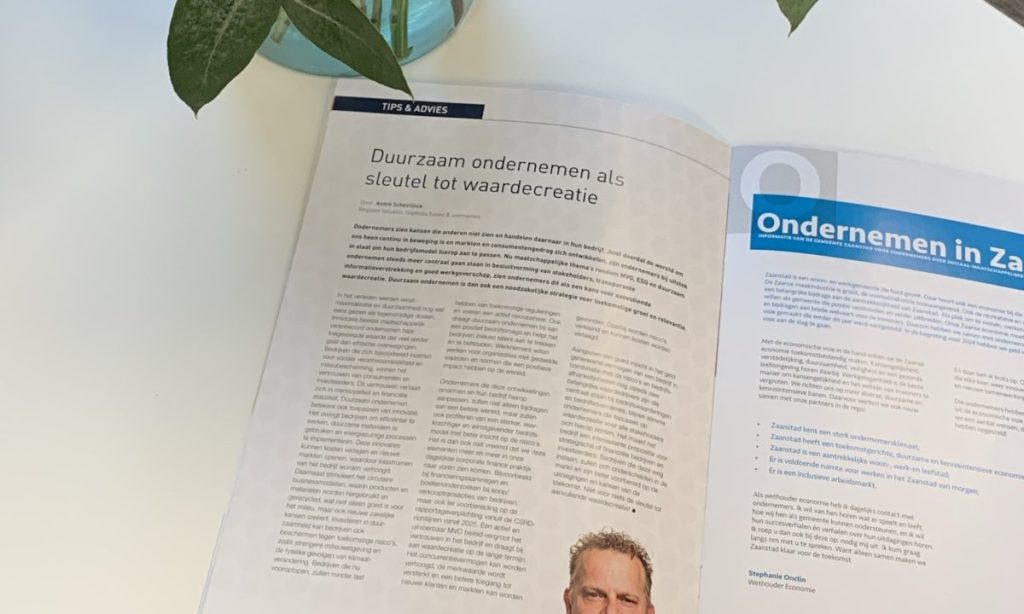
Entrepreneurs see opportunities that others do not and act accordingly in their businesses. Precisely because the world around around us is constantly changing and markets and consumer behavior are evolving, entrepreneurs are pre-eminently able to adjust their business models accordingly. As social issues around CSR, ESG and sustainable business are becoming increasingly central to stakeholder decision-making, transparent information and good employment practices, entrepreneurs see this as an opportunity for additional value creation. Sustainable business is therefore a necessary strategy for future growth and relevance.
In the past, profit maximization and sustainability were sometimes seen as conflicting goals. Meanwhile, corporate social responsibility is proving its added value that goes far beyond ethical considerations. Companies that commit to social responsibility and environmental protection, for example, win the trust of consumers and investors. This trust translates into brand loyalty and financial stability. Sustainable business also means applying innovation. It forces companies to work more efficiently, use sustainable materials and implement energy-efficient processes. These innovations can reduce costs and open new markets, increasing company cash flows. It also encourages circular business models, in which products and materials are reused and recycled, which is not only good for the environment but also creates new business opportunities. Investing in sustainability can also protect companies from future risks, such as stricter environmental laws and the physical effects of climate change. Companies that lead the way now will be less affected by future regulations and conduct active risk management. Corporate sustainability also contributes to a positive corporate image and helps companies attract and retain (new) talent. Employees want to work for organizations with shared values and standards that have a positive impact on the world.
Entrepreneurs who embrace these developments and adapt their businesses accordingly will not only contribute to a better world, but will also benefit from a stronger, more resilient and profitable business model with a better understanding of risk. Not surprisingly, we see these elements coming up more and more in our daily corporate finance practice. For example, in financing applications and book examinations in buy/sell transactions of companies, but also in preparation for the reporting obligation from the CSRD guidelines as of 2025. An active and implementable CSR policy increases confidence in the company and contributes to long-term value creation. Competitiveness can be increased, brand value strengthened and better access to new customers and markets found. In the process, risks are reduced and costs can be lowered.
Since a good understanding of a company’s money-generating potential combined with the risks and business dependencies are still very important value drivers central to business valuations and business acquisitions, smart entrepreneurs who focus on value creation for all stakeholders continue to focus on this. It makes the company an interesting proposition for strategic or financial firms and investors. Companies that go down this path will stand out in the market and be better prepared for the challenges and opportunities of the future. Not for nothing the key to additional value creation!
This article was originally published in ZAAN Business magazine’s December 2023 issue.