The power of substantiation in buyout situations
April 12, 2024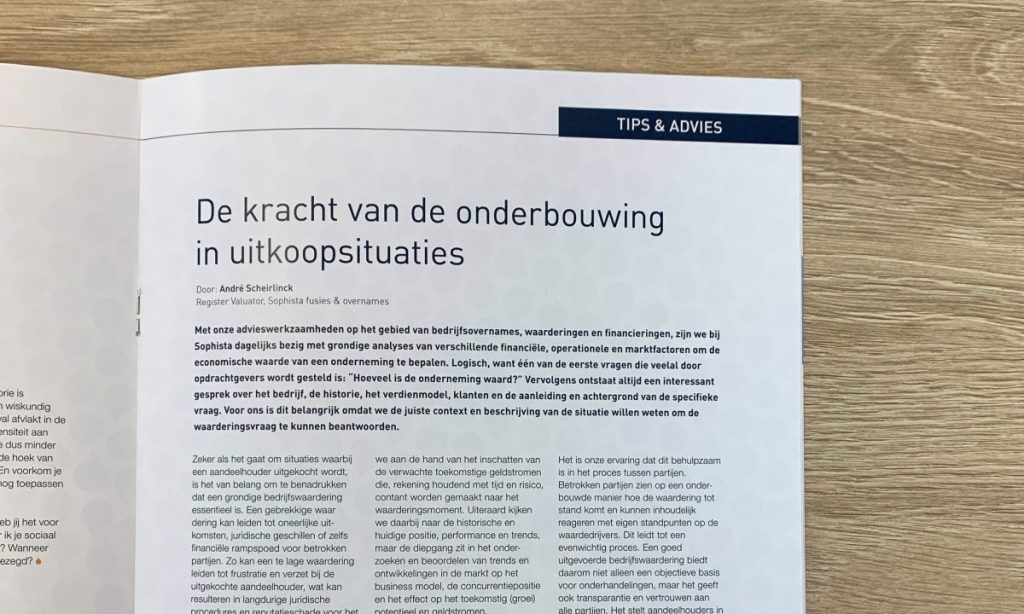
With our consulting work in corporate acquisitions, valuations and financings, we at Sophista are daily engaged in in-depth analyses of various financial, operational and market factors to determine the economic value of a company. This makes sense, as one of the first questions often asked by clients is, “How much is the company worth?” This is always followed by an interesting conversation about the company, its history, revenue model, customers and the reason and background for the specific question. For us, this is important because we want to know the correct context and description of the situation in order to answer the valuation question.
Especially in situations involving a shareholder buyout, it is important to emphasize that a thorough business valuation is essential. An inadequate valuation can lead to unfair outcomes, legal disputes or even financial disaster for parties involved. For example, too low a valuation can lead to frustration and resistance by the bought-out shareholder, which can result in lengthy legal proceedings and reputational damage to the company. On the other hand, too high a valuation can jeopardize the financial health and continuity of the company and harm the interests of other shareholders and stakeholders.
The reasons behind a buyout situation between shareholders can be various in nature, with emotions often running high and taking place both in good harmony and in a fraternal atmosphere. These transactions therefore require not only careful planning and legal alignment, but also a good understanding of the economic value of the company. Once we have properly coordinated the context and circumstances under which the valuation takes place with the parties, we get to work calculating the economic value. We do this by estimating the expected future cash flows which, taking into account time and risk, are discounted to the valuation moment. Of course we look at the historical and current position, performance and trends, but the depth of the analysis lies in investigating and assessing trends and developments in the market on the business model, the competitive position and the effect on future (growth) potential and cash flows.
Concrete assumptions and assumptions regarding future projections of cash flows are crucial in this regard and require good substantiation. Once we have a good understanding of the value drivers of the business, we can then use multiple scenarios or sensitivity analyses to show the effects on the business valuation. For example, depending on the situation, multiple forecasting scenarios of future cash flows can be made, or the effects of a higher or lower gross margin or other KPI can be shown. Sensitivity analyses on the valuation with respect to investments in assets and working capital also often lead to illuminating insights.
It is our experience that this is helpful in the process between parties. Involved parties see in an informed manner how the valuation is arrived at and can respond substantively with their own views on the value drivers. This leads to a balanced process. Therefore, a well-executed business valuation not only provides an objective basis for negotiations, but it also provides transparency and confidence to all parties. It enables shareholders to understand how value was determined and why certain decisions are made. It provides the basis for fair transactions, trust between parties and maximizing long-term value for all stakeholders.
This article was originally published in ZAAN Business magazine’s March 2024 issue.